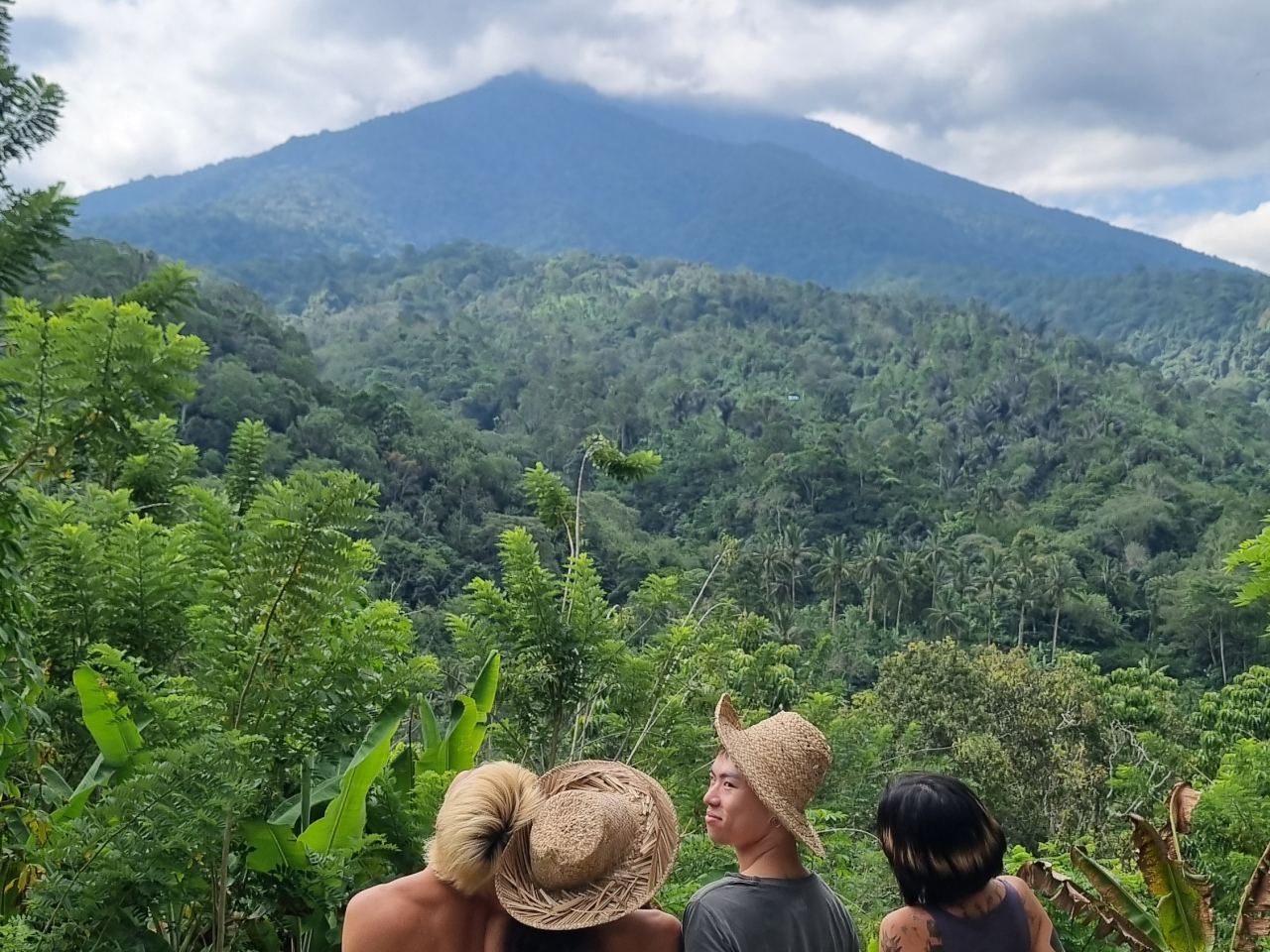
The morning I left my little homestay in Desa Sarinbuana, the village felt like a slow-breathing place: roosters, the clink of kettles, and a scattering of farmers heading up to their rice terraces. If you’re wondering how to get to Pucak Batukaru from Desa Sarinbuana, this is the kind of start I recommend — light breakfast, a warm cup of local kopi tubruk, and a friendly chat with your host about the trail. Desa Sarinbuana is one of those quiet Tabanan villages that sits on the lower slopes of Mount Batukaru, so you already gain the senses of the mountain before you step onto the path: cooler air, mist on the leaves, and the smell of damp earth.
Practical options to begin: if you have a scooter and are confident on narrow uphill roads, you can ride up the village lanes to the community hall or the small village temple where locals usually point out the trailhead. For comfort and luggage, arrange a car or a driver from Tabanan or Bedugul; the last stretch becomes steep and sometimes muddy, especially in the rainy season. Park near the village and ask a local to mark the exact trailhead — there are often painted ribbons or bamboo signposts maintained by the community. I paid a small fee for a licensed local guide, and it was worth every rupiah: guides know the hidden switchbacks, seasonal stream crossings, and how to handle slippery roots.
The trekking experience from Desa Sarinbuana to Pucak Batukaru is a hike through layered Bali: first rice terraces and small farms, then into dense montane forest with moss-covered stones, giant ferns, and old banyan trees. On my ascent the trail crossed two clear streams and climbed through sections of wooden steps and occasional broken stone. Expect muddy stretches in the wet months; a sturdy pair of hiking shoes and gaiters will save you a lot of frustration. Time-wise, most walkers take between 3–5 hours roundtrip depending on pace and how often you stop to breathe in the forest and photograph the views.
Two important notes: Pucak Batukaru sits in protected forest and culturally significant land near the sacred Pura Luhur Jatiluwih complex. It’s common to need a simple permit or to register with the local forest office, and local guides can arrange this for you. Also, if your plan includes visiting Batukaru Temple, dress respectfully — a sarong and sash are often required. Silence and care around temple areas are always appreciated.
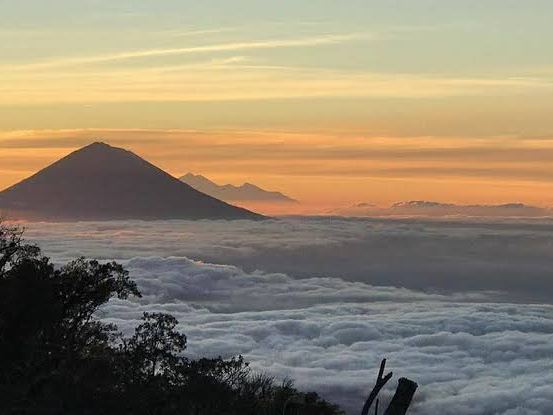
When you reach the summit area, the reward is subtle — not a dramatic panoramic like Batur, but a deep, green silence and a cool breeze that makes you feel held by the mountain. The view slices through cloud banks to reveal ridgelines and patchwork rice fields below. On descent, I stopped again at Desa Sarinbuana for a late lunch of simple nasi campur and a cup of ginger tea at a local warung. The villagers were curious about my photos and shared tips for other nearby walks.
If you’re planning this walk, aim for the dry season between April and October for better footing and clearer views, carry cash for guide and permit fees, bring rain protection, and start early to avoid afternoon fog. The route from Desa Sarinbuana to Pucak Batukaru is less crowded than the classic Batukaru approaches and offers a more intimate, authentic slice of Bali — a misty, green day that feels like the mountain quietly opened its door just for you.