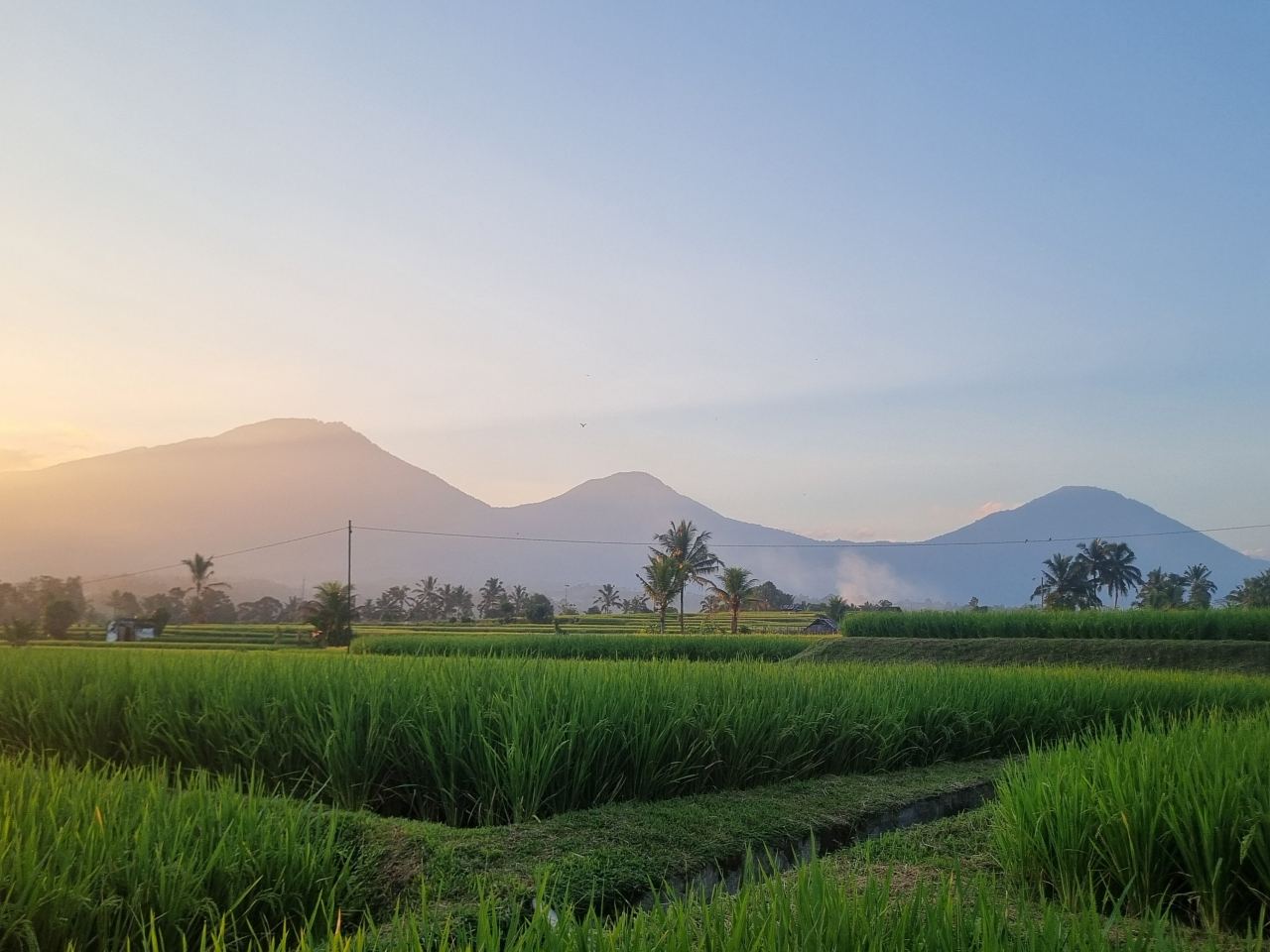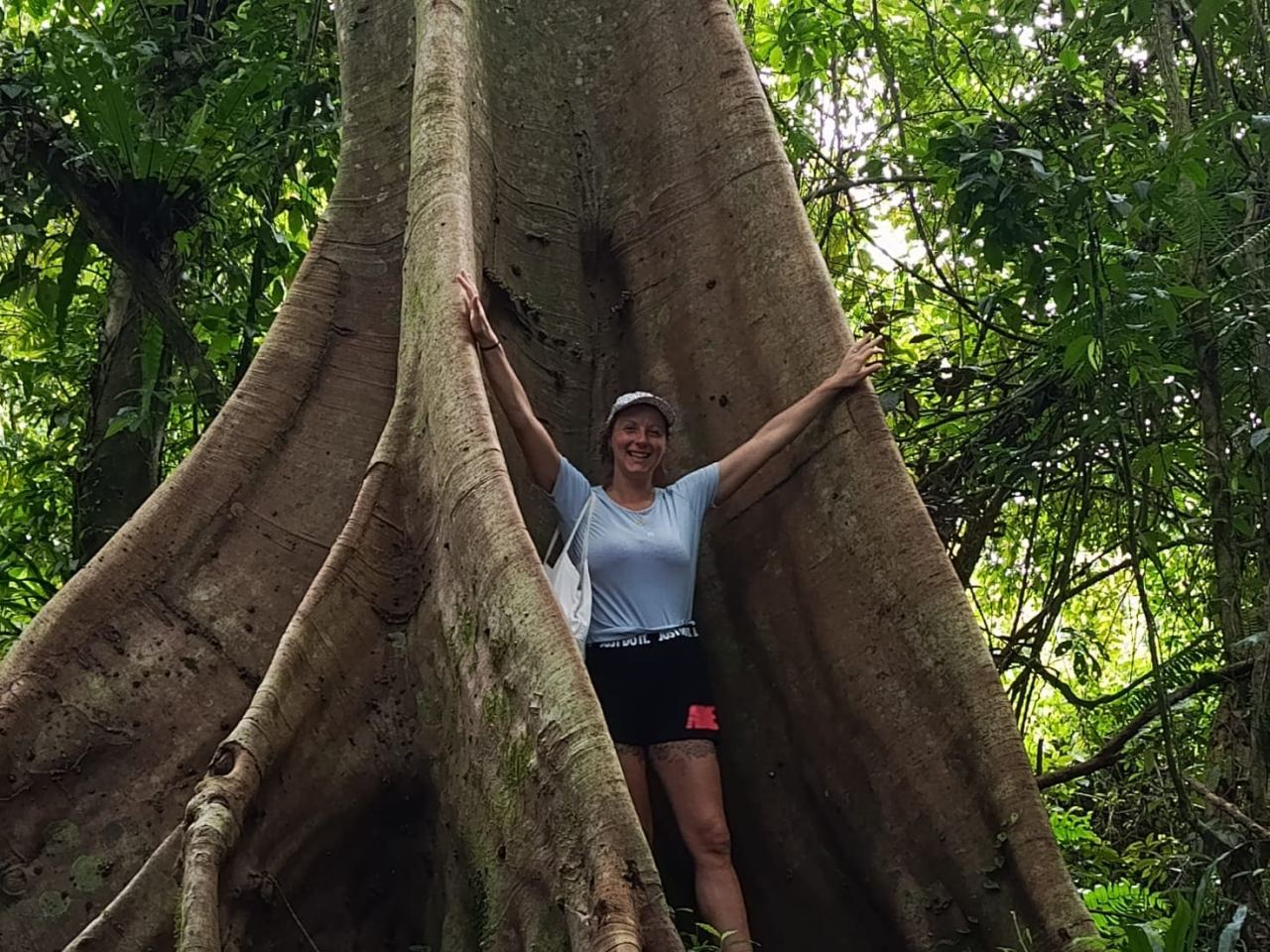
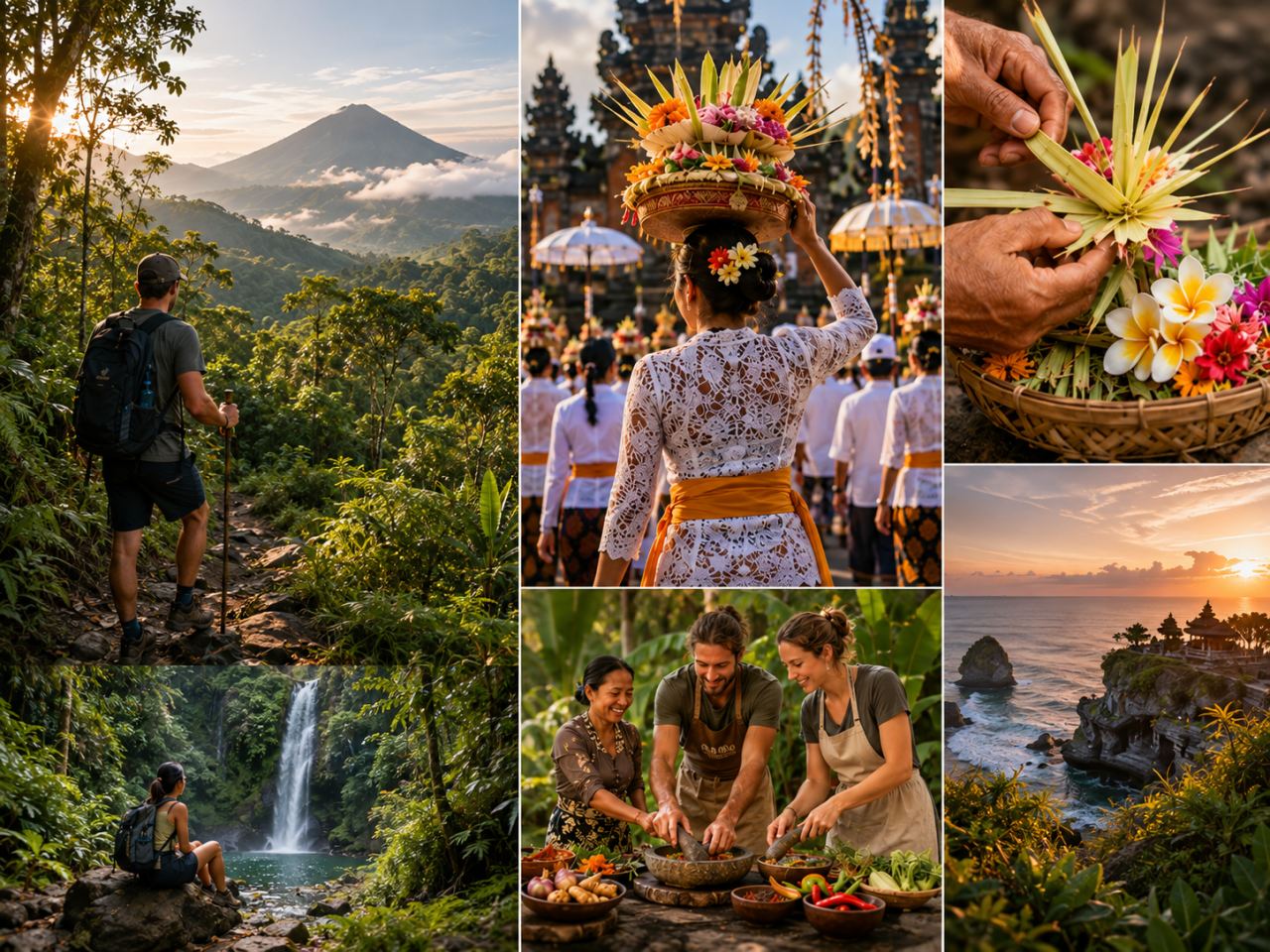
Bali offers far more than beaches and nightclubs. From trekking at the foot of volcanoes, learning traditional ceremonies directly from villagers, to walking through UNESCO World Heritage rice terraces — the island has a depth that's often missed by travelers who only stay a few days.
Q: How many days is ideal to explore Bali?
A: At least 5-7 days if you want a mix of culture, nature, and relaxed pacing without rushing.
Q: Best season?
A: April-October (dry season) is most comfortable for outdoor activities like trekking.
Many travelers arrive with an itinerary full of popular photo spots, then leave feeling like they "never really saw Bali." What's often missed are simpler experiences: breakfast with a farming family in Tabanan, a morning walk on a trail only locals know about, or chatting with a guide who explains the philosophy of Tri Hita Karana — not just a memorized tourist script.
Activities in Bali broadly fall into several types: nature (trekking, waterfalls, rice fields), culture (ceremonies, dance, crafts), adventure (rafting, snorkeling), and wellness (yoga, traditional spa). Areas like Tabanan and the central mountains offer a quieter, more authentic version of Bali compared to the already-crowded southern region. Choosing local operators directly (rather than through layered agents) usually gives access to more personal experiences.
Arrive early for outdoor activities — besides cooler weather, you'll also avoid large crowds. Always carry small cash for villages that don't all accept digital payments yet, and bring a sarong for entering temple areas.
Q: Is it safe to travel solo in Bali?
A: Generally safe, especially on main tourist routes. For trekking in remote areas, a local guide is still recommended.
Q: Do I need to speak Indonesian to communicate?
A: Not required — most tour operators and locals in tourist areas speak basic English, but learning simple greetings is always appreciated.